

As one year closes and another begins, it’s a common time for reflection. Most people reading this likely live above the so-called poverty level. It’s easy, then, to assume that we’re leading perfectly normal lives. But what is normal? Where do we actually fit when measured against the rest of the world?
By almost any long-term measure, the average human alive today lives better than the vast majority of humans who have ever existed. Roughly half of the world’s population is now estimated to live at a middle-class level or higher. Much of the remaining half, about 3.5 billion people, lives at what economists classify as poverty levels.
As a teenager working with a surveying crew in Appalachia, I was struck by how close extreme poverty was to my home in Virginia. It wasn’t an abstract idea or a distant headline; it was right there, in my face.
I encountered it again later, when I deliberately pursued it as a photojournalist at Wounded Knee, South Dakota, identified by the 1980 census as the poorest community in the United States. This was during the same period when famine in Ethiopia held the world’s attention.
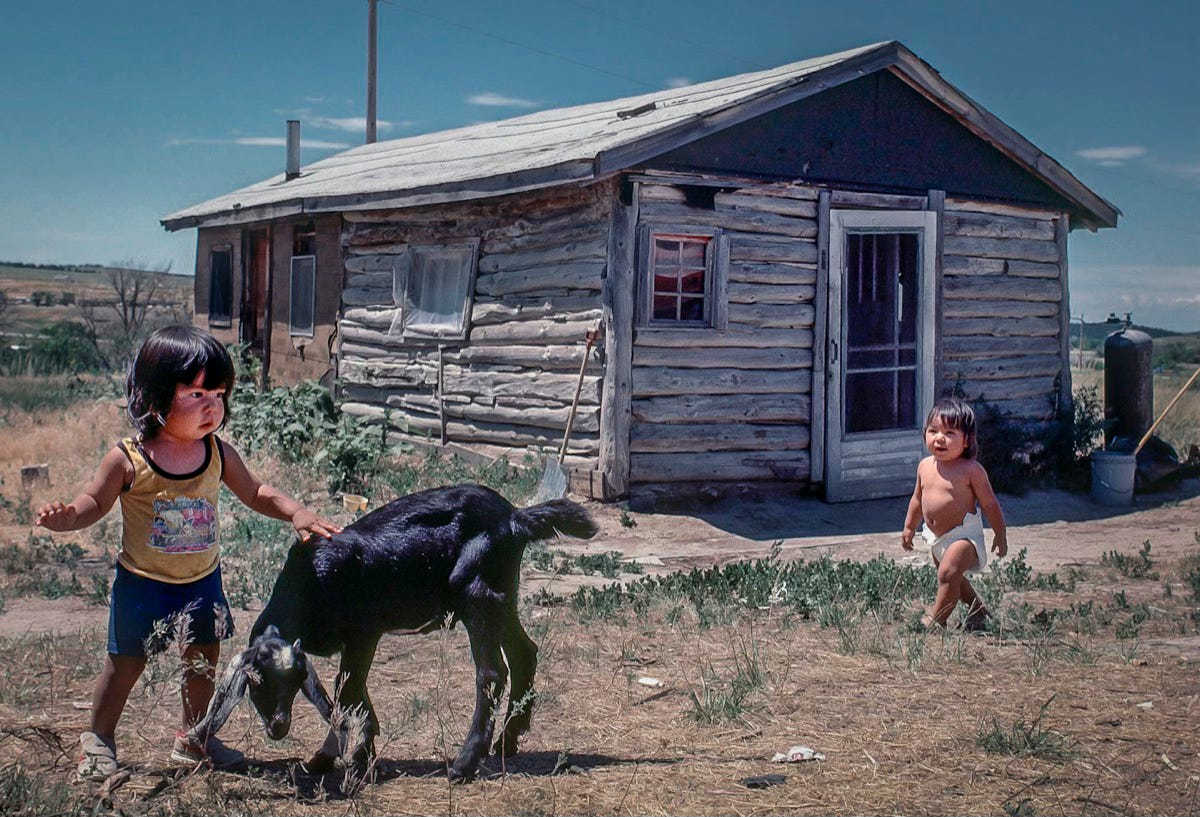
Although this photograph was made more than forty years ago, poverty remains a defining reality here. Recent census estimates show a median household income of roughly $2,500 per year, with nearly all residents living below the federal poverty level.
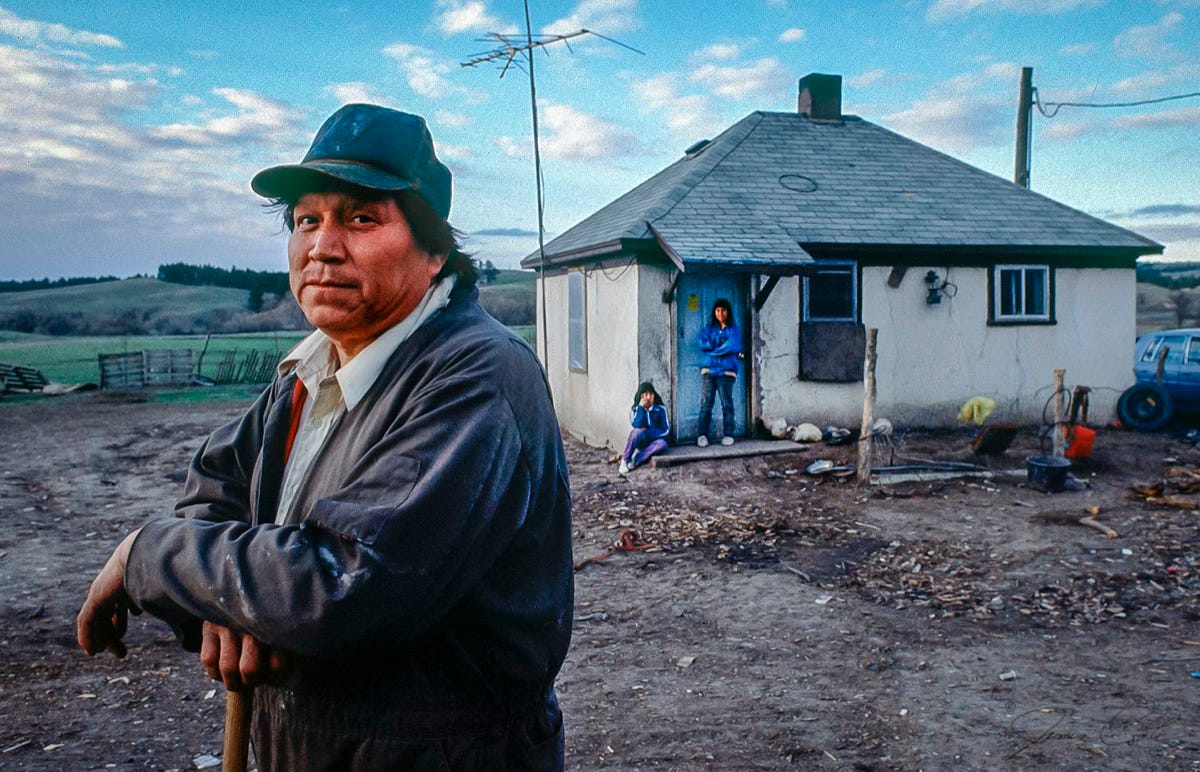
I found Wilbur working outside his one-room house, trying to put in a garden despite the hard, dry ground of the semi-arid prairie.
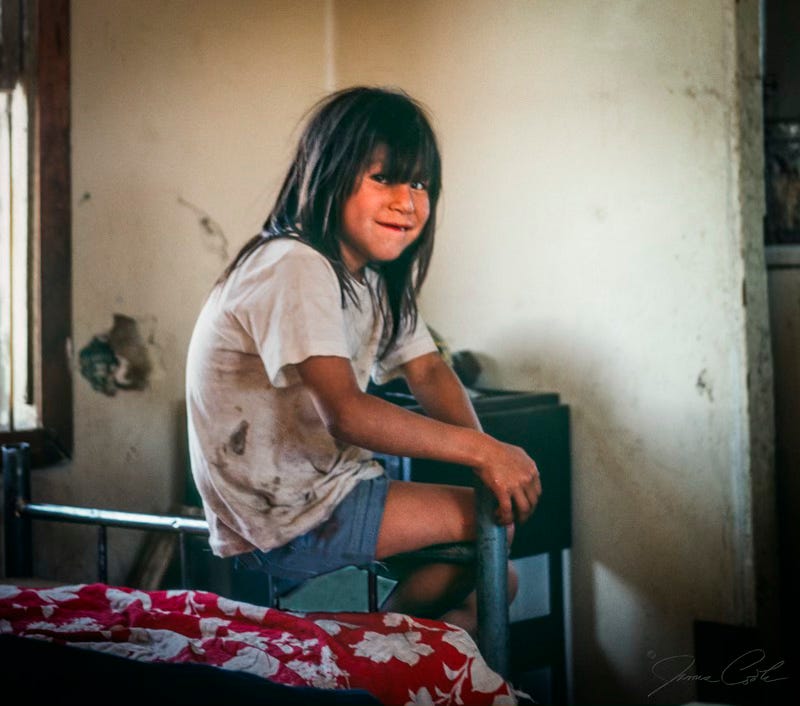
Everyone was always welcoming, but seeing how their lives contrasted with my own was an intense experience. I’ve often wondered how these children have fared in the forty-plus years since.
Poverty doesn’t go away. It exists in our own backyards as surely as it does across the planet.
My role here is simply to call attention to the situation.
My conscience and I will continue the conversation privately.
No comment, just a little time to think...