

Over a span of nearly fifteen years, I made numerous visits to Wounded Knee. One of my favorite subjects was Ruth Black Bear. She was born there in 1918 and died there in 2001, at the age of 83. Ruth always welcomed me warmly, pleased by my interest in her and in the history of her people.
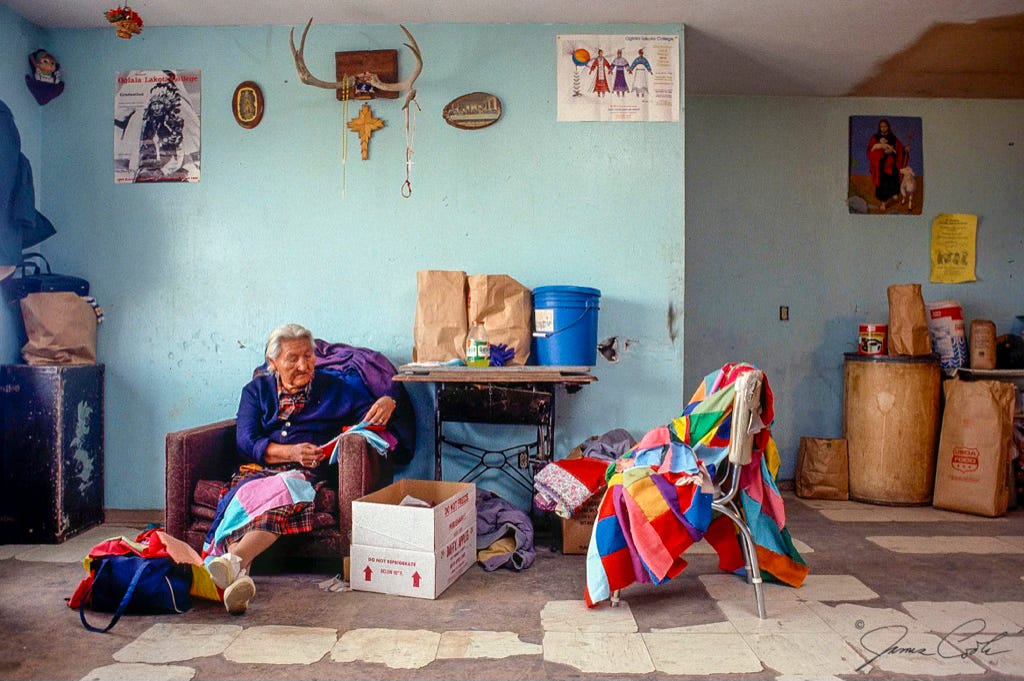
At the time, I knew little about the Indian boarding schools. Only later did I begin to understand the deeper meaning of the stories Ruth had told me. She spoke of being sent away to school, where children were punished if they were caught speaking their native Lakota. They were forbidden to do anything that reflected their Indian heritage.
What stayed with me most was Ruth’s joy at seeing her grandchildren learning those very things she and her generation had been taught to forget. She was proud to see them reclaiming their language, their songs, and their way of life; and she was happy to teach me a few Lakota words and phrases too.
Like Ruth, many elders I met carried memories of the boarding school years. Among them was a man whose life spanned the entire century: John Old Shield.
My search for Native American subjects led me to a 96-year-old medicine man named John Old Shield. He lived with his dog in a small bungalow just outside downtown Denver, tucked in the shadow of a busy highway overpass over the rail yards.
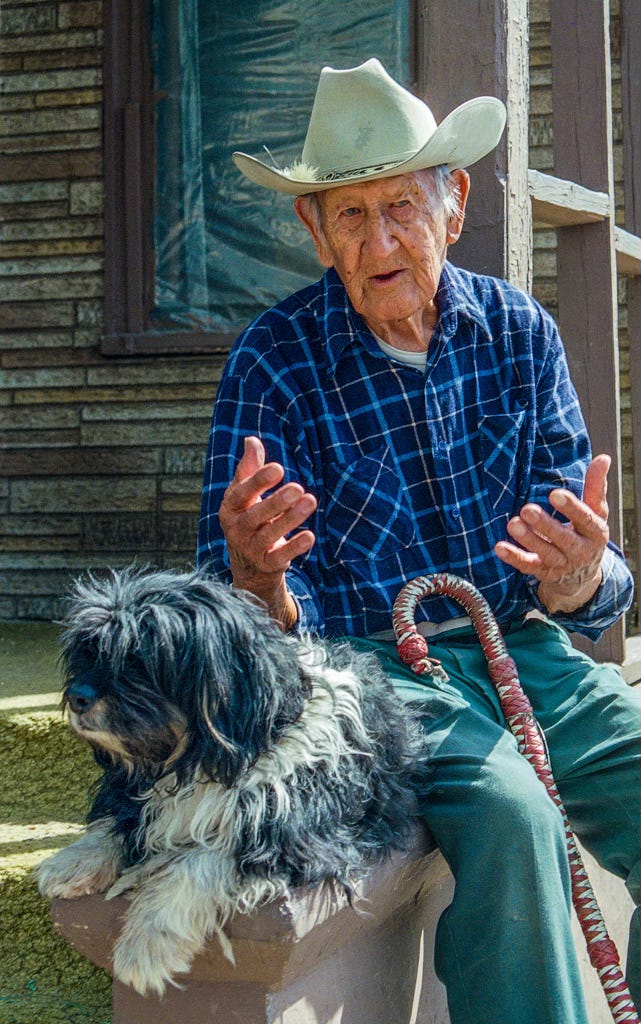
John was pleased to share some time, telling me stories about the way things were. He had been born as an Oglala Lakota Sioux in 1894 on the Pine Ridge Reservation. As a young boy, he and later his brother had been sent off to the Carlisle Indian Industrial School in Carlisle, Pennsylvania.
The Carlisle boarding school became infamous for its mission of forced assimilation to ‘Kill the Indian and Save the Man.’ Upon arrival, the children’s clothing was burned and their long hair cut off. John told me of how they were punished if they were caught speaking their Lakota language or doing anything reflective of their native life.
Those efforts had not erased John’s identity. He remained fluent in Lakota and later returned to the reservation as a tribal leader. He became a medicine man; a healer. Out of respect for the spirit of those responsibilities, he wouldn’t reveal details to me about that role.
Though he spent several years in Denver, John eventually returned home to the reservation. He died there in 1995, at the age of 101.
Both Ruth and John serve as reminders that even under the burden of forced assimilation, culture endures, quietly, stubbornly, and with grace.
Wonderful. Living history at its best.