

A few years ago, I was proud and deeply honored when the Holland Museum in Holland, Michigan dedicated a gallery to exhibit my Portraits of Contemporary Native Americans. It was especially meaningful because, at that same time, just a few miles north, the Muskegon Museum of Art was exhibiting the work of Edward Curtis.
Edward Curtis was an American photographer who devoted more than 30 years of his life to documenting Native American tribes in the early 20th century. Between 1907 and 1930, he created thousands of photographs and extensive written records of more than 80 tribes. His images captured ceremonies, daily life, and portraits of tribal members at a moment of profound cultural change and displacement.
Although my own efforts fall well short of matching his vast undertaking, Curtis has been an ongoing inspiration in my pursuit of documenting more recent generations of Native Americans. Beginning more than 50 years after the last of his photographs, I’ve worked to document a time marked by cultural revival, resilience, and evolution.
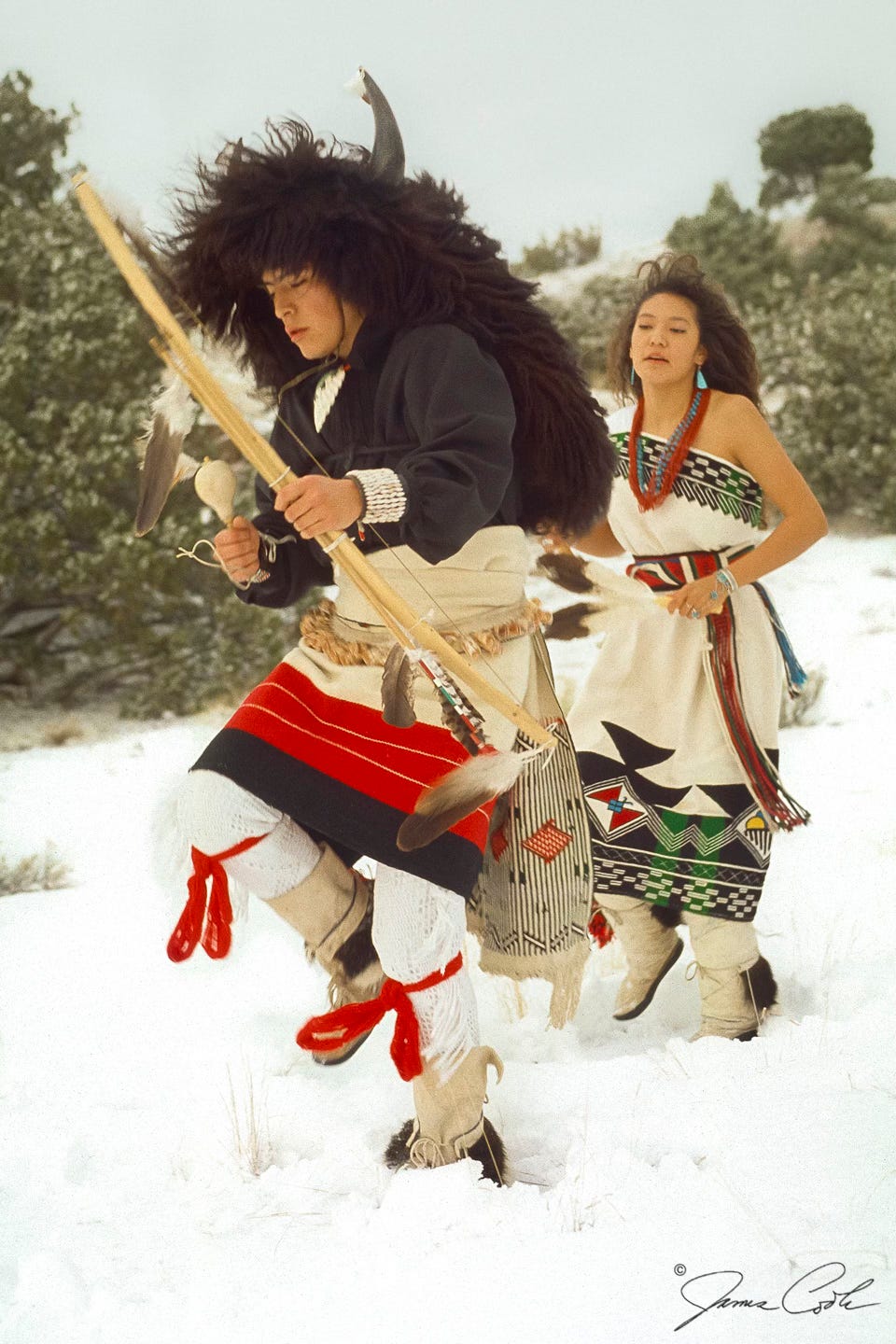
At one point, my work led me to the pueblos of New Mexico, and ultimately to Tesuque Pueblo. The 500-year-old community remains one of the more traditional pueblos. After three years of visits, conversations, and no photography, I was granted permission to photograph two young dancers, James Duran and Tun-te’ Vigil, performing the sacred Buffalo Dance. This dance expresses gratitude and respect for the buffalo’s historic role in providing sustenance and materials. Through intermittent snow showers they danced, and together we preserved a moment for future generations.
Seventy years earlier, Edward Curtis had also visited Tesuque Pueblo and photographed two male Buffalo Dancers. Viewing the two images side by side reveals how much has changed, and how much has endured. For me, those differences underscore the importance of creating a continuing visual record.
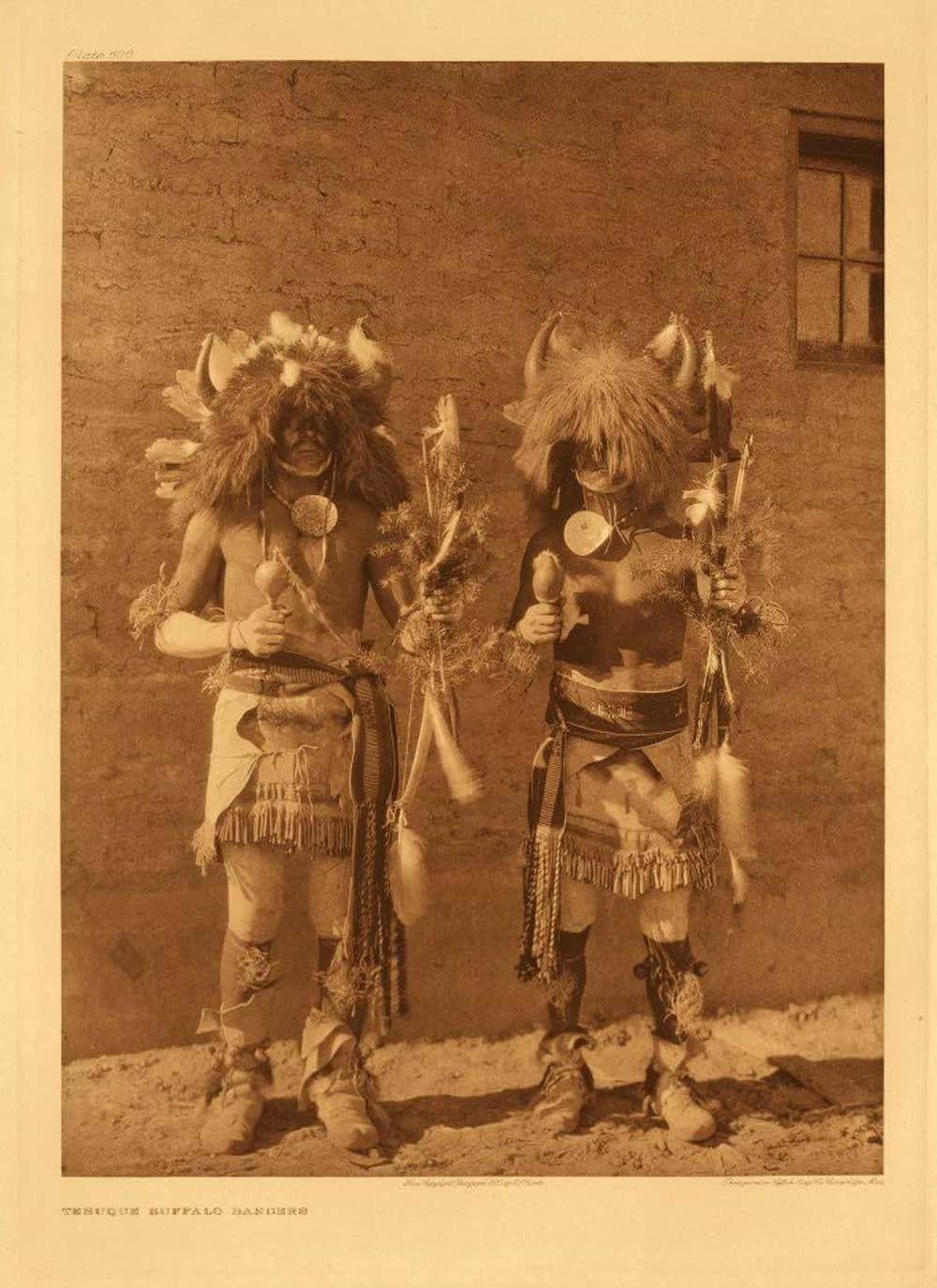
Curtis’s romantic, often staged portraits have been both celebrated for their artistic power and criticized for reinforcing simplified or stereotyped views of Native life. Can I hope to do better? My images inevitably reflect my own perceptions. The choices I make of whom to photograph, whether to capture a smile or a solemn expression, eyes toward the camera or gazing beyond, all shape the story as much as any moment itself.
As with Curtis, my photographs are simply one man’s best effort to interpret and pass along images and stories. There are innumerous facets to every one of them.
On another note, I’ve promised to avoid filling your email inbox with these articles. For every one that you receive there are others simply posted to the site, such as On Inspiration and Style. I hope you’ll take the time to look in.
Please fill my inbox as your pleasure.